
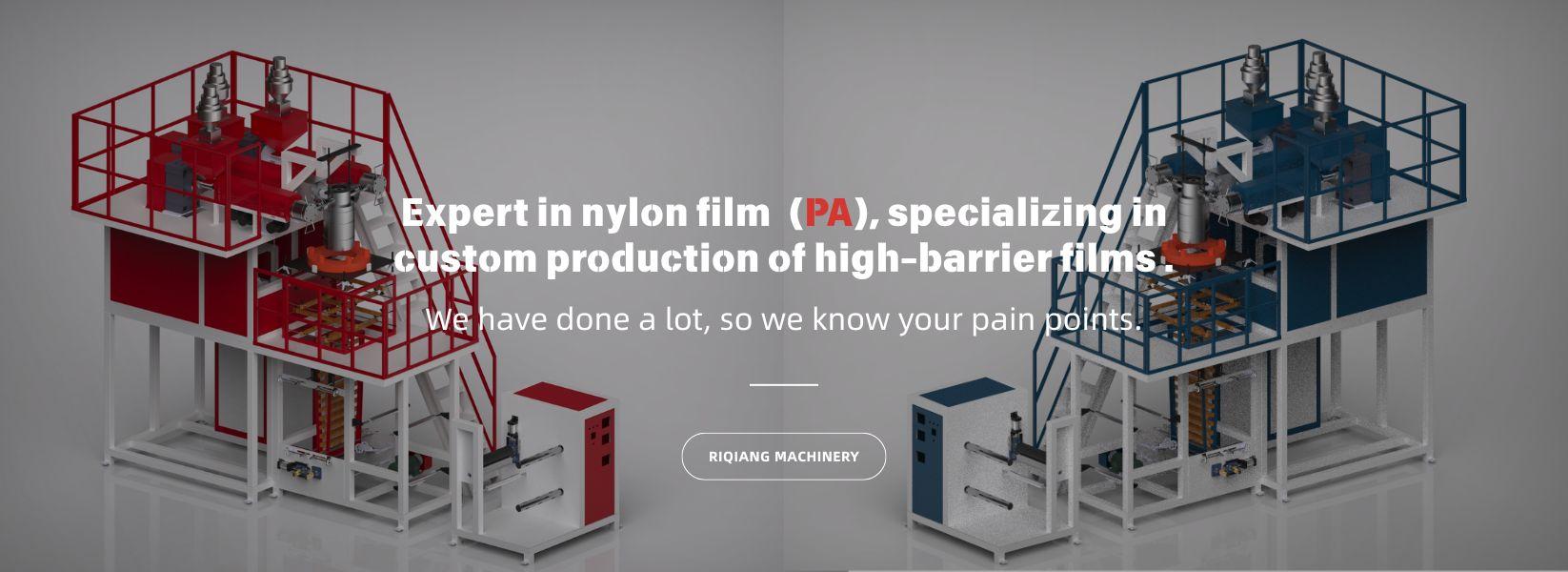
1. Industry Landscape: Rigid Demand Growth for Medical Waste Bags, with Exceptionally High Quality Hurdles
Driven by rising global public health awareness, accelerated medical infrastructure development, and aging populations worldwide, the market for medical waste bags (including bio-medical waste bags) is experiencing steady growth. Industry estimates project a CAGR of 6%–8% from 2026 to 2030 — significantly outpacing general-purpose packaging bags.
However, medical waste bags are fundamentally different from ordinary garbage bags. The critical pain points are:
These stringent standards mean: This is not a category you can produce with “any film-blowing machine + bag maker.” A scientifically planned equipment combination matters far more than chasing the highest specs on any single machine.
2. Common Medical Waste Bag Dimensions & Capacity Reference
Below are the mainstream medical waste bag sizes (recommended standard options; non-standard customization is also available upon request):
| Spec No. | Bag Width (mm) | Bag Length (mm) | Film Thickness (μm) | Approx. Weight per Bag (g) | Typical Application |
|---|---|---|---|---|---|
| S | 450 | 550 | 50—60 | 8—12 | Clinic small waste, IV tubing |
| M | 550 | 650 | 60—70 | 14—20 | Ward general waste, medical dressings |
| L | 700 | 800 | 70—80 | 24—32 | Operating room waste, pathological tissues |
| XL | 900 | 1000 | 80—100 | 38—55 | Large infectious waste, bulk disposal |
3. Recommended Equipment Configuration: ABA 1000mm Blown Film Line + Offline Single-Color Printer + Standalone Bag Making Machine
Based on the process requirements and quality standards of medical waste bags, Riqiang Machinery recommends the following “separate, dedicated-machine” configuration:
A) Extrusion: ABA 1000mm 3-Layer Co-Extrusion Blown Film Machine
| Selection Rationale | Detailed Explanation |
|---|---|
| Why ABA co-extrusion? | ABA structure = Outer A-layer / Middle B-layer / Inner A-layer. The A-layers use high-grade virgin resin (ensuring toughness, heat-sealability, and surface appearance), while the B-layer can incorporate calcium carbonate filler or a controlled percentage of recycled resin (reducing material costs). This “good skin on both sides, economical core” structure delivers excellent puncture and impact resistance while significantly lowering raw material expenses — making it the industry-preferred approach for medical waste bags. |
| Why 1000mm width? | Maximum blown film width is approximately 1000mm (flat width). This size allows “1-to-2” or “1-to-3” slitting to flexibly accommodate 450mm–900mm bag widths. One 1000mm line covers all common medical bag sizes, eliminating the need for multiple extrusion lines. |
| Recommended Output | Extrusion rate approximately 120–180 kg/h (depending on formulation), translating to 2.8–4.3 tons per 24-hour day. |
| Key Features | Extended screw for superior melt homogeneity; high-precision ceramic heaters (±1°C temperature control); automatic air ring (thickness tolerance ≤ ±5%); dual-station winder (reducing downtime during roll changes). |
B) Printing: Single-Color Printing Unit (Offline Operation Recommended)
| Selection Rationale | Detailed Explanation |
|---|---|
| Why single-color? | Medical waste bag printing typically involves single-color markings — red biohazard symbols, black warning text, barcodes/QR codes. Multi-color registration is rarely required. A single-color press fully meets all compliance needs at 1/5 to 1/3 the investment cost of a multi-color machine. |
| Why offline (not in-line)? | Many new entrants worry about “in-line printing slowing down the entire line” — and rightly so. Riqiang‘s strong recommendation is printing as a standalone offline process for three reasons: ① Medical bag orders are often multi-variety, small-batch — offline printing offers maximum changeover flexibility; ② If the printing unit stops (for plate changes or cleaning), an in-line configuration halts the entire production line — extremely costly; ③ Offline printing can be scheduled independently, without being constrained by bag-making throughput. |
| Recommended Specs | Single-color gravure or flexo printing unit (flexo is more eco-friendly with water-based inks); automatic edge-guide system; drying oven (ensuring ink adhesion and rub resistance). |
| Capacity Match | A single single-color printer typically far outpaces the output of one extrusion line. One printer can easily support the film output of 2–3 blown film lines — no need for multiple printing units. |
C) Bag Making: Medical-Grade Bag Making Machine (Standalone, Not In-line)
| Selection Rationale | Detailed Explanation |
|---|---|
| Why standalone bag making? | Medical waste bags demand extremely high seal strength and integrity — bag-making speed must not be excessive (sufficient heat-sealing and cooling time are critical). If forced in-line with extrusion and printing, the entire line speed will be constrained by the bag maker, wasting the high output of the upstream processes. Standalone operation means: extrusion runs 24/7 producing film rolls at full speed, while the bag-making shop floor schedules production flexibly according to actual orders — no mutual interference, and overall throughput is actually higher. |
| Key Selection Criteria | ① Heavy-duty sealing knives (ensuring strong seals on thick films); ② Dual-zone temperature control (independent upper/lower knife temperature for different thicknesses); ③ Automatic stacking / rewinding (medical bags typically require neat stacking or roll form); ④ Optional UV sterilization or cleanroom installation (for bio-medical-grade requirements). |
| Recommended Model | Sealing width adapts to 450–900mm; bag length adjustable; sealing power ≥ 3kW. Production speed approximately 30–60 bags/minute (depending on bag length and film thickness). |
4. Capacity Matching Recommendations: How Many Lines Should a New Entrant Start With?
This is the most frequently asked question. Riqiang Machinery recommends a “1+1+2” start, scaling up progressively:
| Solution Tier | Blown Film Lines | Printing Units (Offline) | Bag Making Machines | Approx. Monthly Capacity (25 days/month) | Best For |
|---|---|---|---|---|---|
| Entry Level | 1 × ABA 1000mm | 1 × Single-Color Printer | 1 × Medical Bag Maker | approx. 50–70 tons/month | New entrants testing the market |
| Recommended Level | 1 × ABA 1000mm | 1 × Single-Color Printer | 2 × Medical Bag Makers | approx. 80–110 tons/month | Growing customers with secured medical approvals and stable orders |
| Expansion Level | 2 × ABA 1000mm | 1 × Single-Color Printer | 3–4 × Medical Bag Makers | approx. 160–220 tons/month | Export-oriented enterprises with long-term partnerships with hospitals or medical groups |
Capacity Logic Explained:
5. Process Flow Chart (Text Version)
text
【Raw Materials (Virgin + Filler/Recycled)】
         ↓
【ABA 1000mm Blown Film Machine】← Continuous high-speed film roll production (24/7)
         ↓
【Film Rolls → Warehouse Storage】
         ↓
  ┌──────┴──────┐
  ↓                 ↓
【Offline Printing】  【(Some unprinted rolls go directly to bag making)】
  ↓                 ↓
  └──────┬──────┘
         ↓
【Bag Maker A + Bag Maker B】(Standalone operation, scheduled by orders)
         ↓
【Finished Medical Waste Bags】(Stacked/rolled → Sterile packaging → Shipping)
6. Core Philosophy: Dedicated Machines for Dedicated Tasks — The Hard Truth
| Misconception | Riqiang‘s Recommended Philosophy |
|---|---|
| “I’ll buy one multi-functional machine that does extrusion, printing, and bag making all in one.” | Dedicated machines for dedicated tasks — each process should be handled by the equipment best suited for it. Combo machines may save floor space, but they suffer from slow changeovers, higher breakdown rates, and limited overall throughput. |
| “In-line automation is the only way to show sophistication.” | In-line ≠ Efficiency. When optimal speeds differ across processes, in-line configurations actually waste capacity. Standalone processes with flexible scheduling are the correct production model for high-quality products like medical bags. |
| “Faster bag making is always better.” | Medical bags demand leak-proof seals and zero failure — not just speed. Riqiang‘s bag makers pursue reasonable speed while holding quality as the top priority — that’s what truly serves our customers’ long-term interests. |
7. Added Value from Riqiang Machinery
If you would like to learn more, please send us an email or give us a call. Our customer service team will be happy to assist you!
Contact Person:
Phone: 8613790585461
Email: cici_luo@yeah.net、cndgnie@gmail.com、465319497@qq.com
Address: Factory Adddress: Wuxia Industrial Park, No. 7, South 3rd Street, Qiaodong Road, Qiaotou Town, Dongguan City, Guangdong Province, China
Douyin QR

Douyin QR